


What Should I Expect at an ENT Specialist Consultation?

Dr Lau Chee Chong
Medical Director & Senior Consultant ENT Surgeon
MBBS (Singapore), FRCS (Edinburgh), FAMS (Singapore)

An ENT specialist, also known as an otorhinolaryngologist, focuses on comprehensively treating issues related to the ear, nose and throat. During your first ENT specialist consultation, you can expect your doctor to provide a detailed diagnosis of your symptoms, a physical examination of your head and neck, a review of your prior medical history and then a personalised treatment plan.
ENT specialists manage both common and complex conditions, ranging from sinus infections and hearing loss to voice disorders and balance problems. If you are experiencing persistent symptoms that are starting to affect your quality of life, an ENT consultation may be able to provide some much-needed clarity and structured medical advice.
When Should I Visit an ENT Specialist?
While occasional ear, nose or throat discomfort can be part of common viral illnesses, certain symptoms may signal an underlying condition that requires specialist evaluation. You may benefit from seeing an ENT specialist if your symptoms:
- Do not improve with initial treatment from a general practitioner
- Keep returning despite medication
- Are progressively worsening
- Interfere with sleep, work or daily activities
- Are associated with hearing changes, breathing difficulty or swallowing problems
Some symptoms that may indicate a problem in your upper respiratory tract or ear structure include:
- Persistent hearing loss or ringing in the ears (tinnitus)
- Recurrent vertigo or unexplained dizziness
- Regular ear infections
- Chronic nasal blockage or sinus pressure
- Frequent sinus infections or nosebleeds
- Ongoing sore throat or voice changes lasting more than two weeks
- Difficulty swallowing or a persistent throat lump sensation
An ENT doctor is equipped to provide a detailed assessment of these symptoms, using specialised tools and tests. Early assessment at an ENT specialist clinic allows for accurate diagnosis, targeted treatment and could prevent future complications.
How Can I Prepare for My First ENT Appointment?
You can prepare for your first ENT appointment by collating the information that your doctor will need. It can be useful to make a note of when your symptoms first started and how often they recur. If you have visited a general practitioner before, it will be helpful to recall any diagnosis they may have given you.
It can also be helpful to:
- Bring any previous medical records, scan reports or hearing test results
- Prepare a list of current medications and supplements
- Note how long your symptoms have been present and whether they are worsening
- Record any triggers, patterns or relieving factors
- List down questions or concerns you would like addressed by your ENT specialist
What Does a Consultation With an ENT Specialist Look Like?
Your consultation with an ENT specialist will be structured with a step-by-step approach, where they make use of the information provided by you to diagnose your condition and prepare the most appropriate course of treatment.
Discussion of Symptoms
Your ENT specialist will likely begin by reviewing your medical history and discussing the primary symptoms you have been experiencing. This includes understanding when the symptoms first started, how frequently they occur, how severe they are and whether they have been improving or worsening over time.
Your doctor will also ask about any associated symptoms, such as dizziness, nasal discharge, difficulty swallowing or voice changes, as well as any treatments you may have previously received from a general practitioner or other healthcare providers. You should disclose relevant medical conditions, allergies, past surgeries and medication use.
This detailed conversation helps your ENT specialist form an initial assessment and determine the most appropriate next steps in your evaluation.
Physical Examination
After reviewing your symptoms, your ENT specialist can carry out a targeted clinical examination to discover potential causes. They will typically use specialised tools to examine your ear, nose, throat and neck to identify any abnormalities.
Common parts of the examination include:
- Examining your ear canal and eardrum for earwax buildup, injuries, lesions or infection
- Checking your sinuses and nasal passage for swelling, inflammation, blockages or structural deviation
- Assessing your throat, neck and vocal cords for nodules, inflammation, enlarged lymph nodes or other masses
This physical examination is usually straightforward, non-invasive and allows for clear visualisation of affected areas.
Diagnostics Tests
If your symptoms require further evaluation, your ENT specialist may recommend additional diagnostic tests to confirm the diagnosis or assess the severity of your condition.
Nasal Endoscopy
The initial examination of your nose is limited to the anterior front nasal passages and does not allow full visualisation of deeper structures. To get a deeper look, ENT specialists commonly use nasal endoscopy.
Nasal endoscopy is an in-clinic procedure that uses a thin, flexible camera to examine the nasal passages and sinus openings in detail. It allows your doctor to detect inflammation, nasal polyps, structural abnormalities or signs of chronic sinus disease that may not be visible during a standard examination.
Hearing Assessment (Audiometry)
If you are experiencing hearing loss, tinnitus or ear fullness, a hearing test may be conducted to measure your hearing levels across different frequencies. This helps determine the type and degree of hearing loss and guides appropriate treatment recommendations.
Imaging Studies (CT or MRI Scans)
In certain situations, your ENT specialist may recommend imaging studies to obtain a more detailed view of internal structures. These imaging studies are typically advised only when clinically indicated to clarify complex or persistent conditions.
A CT scan is commonly used to evaluate the sinuses and surrounding bone structures, particularly in cases of chronic sinusitis, recurrent infections or when surgical planning is being considered. An MRI scan, on the other hand, provides clearer visualisation of soft tissues and may be recommended if there is concern about tumours, nerve-related conditions or deeper neck masses.
Treatment Plan
Once your evaluation is complete, your ENT specialist will provide a diagnosis and discuss your recommended treatment options.
Management may involve medication, lifestyle modifications, allergy control, in-clinic procedures or, where necessary, surgical intervention. Your doctor will also walk you through the expected outcomes, potential risks and the anticipated recovery timeline, allowing you to make an informed decision.
In certain cases, surgery may be recommended. This is typically considered when symptoms do not respond to conservative treatment, when there are structural abnormalities such as nasal polyps, a deviated septum or when cancer is diagnosed. Your ENT specialist will discuss the findings in detail and coordinate a comprehensive treatment plan. Early detection and timely intervention may be the key to improving patient outcomes.
If follow-up appointments are required, a review can be arranged to monitor your progress and assess your response to treatment. Ongoing follow-up ensures that your condition is effectively managed and treatment is adjusted when needed.

The First Step Towards Better Ear, Nose and Throat Health
An ENT specialist consultation is designed to provide clarity, accuracy and a structured path forward. For many patients, this first consultation is important for the sake of their reassurance. It can greatly relieve your mental discomfort to know that your symptoms are being taken seriously and addressed with a structured, specialist-led approach. This careful evaluation may play an important role in preventing complications and improving long-term outcomes, whether your symptoms are mild or complex.
Ear, Nose & Throat Centre CC Lau specialist clinic provides a structured approach to ENT condition diagnosis. We offer thorough evaluations of symptoms as part of our patient-focused approach. Our specialist care is led by Dr Lau Chee Chong, our Medical Director and Senior Consultant ENT Surgeon, who provides personalised treatment plans tailored to each patient’s condition. Dr Lau has extensive experience in diagnosing and managing nasal, sinus and ear disorders, and works closely with patients to improve breathing, sleep quality and overall quality of life.
If you are looking to book your first appointment, contact us today and let us help you move toward better ear, nose and throat health.
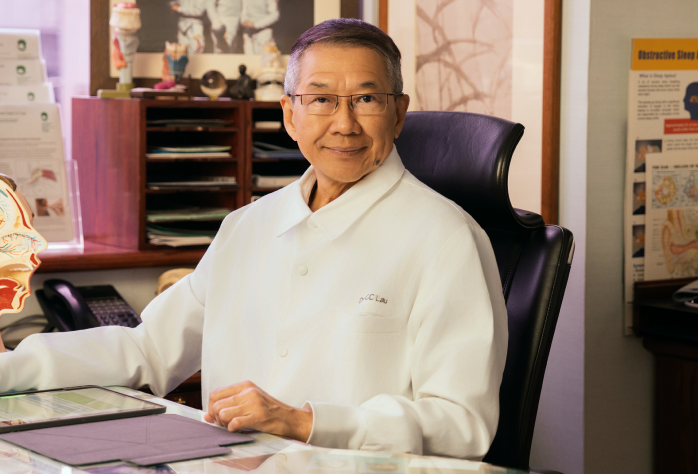
Dr Lau Chee Chong
Medical Director & Senior Consultant ENT Surgeon
- Bachelor of Medicine, Bachelor of Surgery (Singapore)
- Fellow of the Royal College of Surgeons (ENT) (Edinburgh)
- Fellow of the Academy of Medicine (ENT) (Singapore)
Dr Lau Chee Chong is our Medical Director and Senior Consultant ENT Surgeon at Ear, Nose & Throat Centre CC Lau. With over 18 years in private practice and extensive experience in both adult and paediatric ENT, Dr Lau’s expertise spans diagnostic, surgical and medical management of ear, nose, throat and head and neck conditions, including rhinitis, sinus disease, sleep-disordered breathing and head and neck cancers.
Dr Lau has trained and worked at leading ENT centres in the UK, held leadership roles and regularly shares his knowledge at professional conferences. His practice covers a comprehensive range of ear, nose, throat and head and neck conditions, providing both medical treatment and surgical care.

3 Mount Elizabeth, Suite 14-11 (14th Floor)
Mount Elizabeth Medical Centre
Singapore 228510


