


Middle Ear Effusion in Children: Diagnosis and Treatment

Dr Lau Chee Chong
Medical Director & Senior Consultant ENT Surgeon
MBBS (Singapore), FRCS (Edinburgh), FAMS (Singapore)
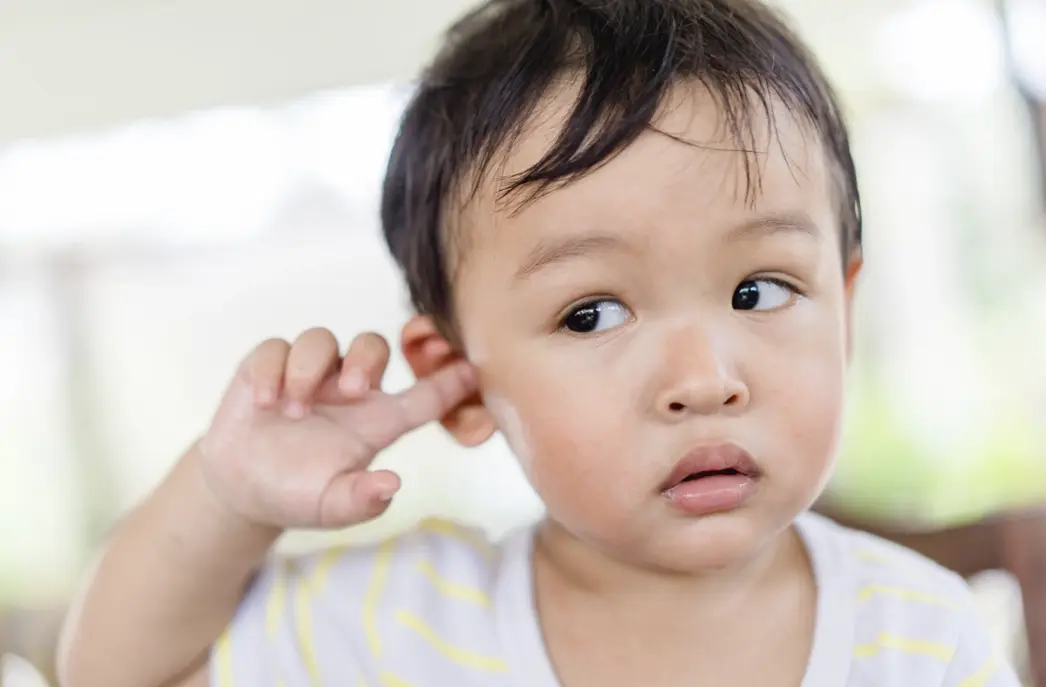
Middle ear effusion, also known as otitis media with effusion (OME) or glue ear, is a common condition that primarily affects children where fluid accumulates in the middle ear. This can cause muffled hearing, a feeling of fullness or pressure in the ear and, less commonly, mild ear discomfort. Prolonged hearing difficulties associated with middle ear effusion may affect speech and language development in some children. Although this condition often resolves on its own within three to six months, medical attention should be sought if hearing difficulties persist, symptoms worsen or there are concerns about speech or language development.
What Is Middle Ear Effusion and Why Does it Occur in Children?
Middle ear effusion occurs when fluid accumulates in the middle ear space behind the eardrum without signs of an active infection. This happens when the eustachian tube, a small passage that connects the middle ear to the back of the throat and the nasal cavity, becomes blocked, typically due to it narrowing or swelling. This tube allows air to pass through, allowing fluid drainage and pressure equalisation within the middle ear.
This condition is particularly common in children as their eustachian tubes are smaller, narrower, and more horizontal than those of adults. As a result, fluid can become trapped more easily, especially following a cold, upper respiratory infection, allergies, or an episode of acute ear infection. While middle ear effusion often resolves on its own, persistent fluid buildup can affect hearing and may impact speech and language development in young children if left untreated.
Common Signs and Symptoms of Middle Ear Effusion in Children
Middle ear effusion (OME) does not always cause obvious symptoms, which can make it difficult for parents to recognize. Many children experience mild or no discomfort, and the condition is often discovered during a routine medical examination. Furthermore, younger children may have difficulty describing their symptoms than older children. However, persistent fluid buildup in the middle ear can affect hearing and may lead to noticeable changes in a child's behavior, communication, or development.
Common signs and symptoms of middle ear effusion in children include:
Hearing Difficulties
Fluid in the middle ear can interfere with sound transmission, resulting in temporary hearing loss. Children may frequently ask for repetition, turn up the volume on devices, or appear inattentive.
Feeling of Pressure in Ear
Although OME typically causes little to no pain, some children may complain of pressure, fullness, or mild discomfort in the affected ear.
Balance Problems
Some children may experience unsteadiness, clumsiness, or mild balance difficulties due to changes in middle ear function.
Speech and Language Delays
Prolonged hearing impairment may affect a child's ability to develop speech, language, and communication skills, particularly during critical developmental years.

Diagnosis, Treatment, and When to See a Doctor for Middle Ear Effusion
Although most cases of middle ear effusion can resolve on their own, medical assessment is recommended if symptoms persist or hearing difficulties become significant.
Diagnosing Middle Ear Effusion
Middle ear effusion is often diagnosed through a combination of medical history, symptom assessment, and a physical examination of the ear.
Medical History Review
The doctor will ask about recent ear infections, colds, allergies, hearing concerns, development, and any behavioral changes that may suggest hearing difficulties.
Otoscopic Examination
The doctor will perform an otoscopy, which is an examination of the eardrum, ear canal, and outer ear to look for signs of fluid accumulation. These could be a dull appearance, reduced mobility of the eardrum, or visible air bubbles behind the eardrum. The doctor may also perform pneumatic otoscopy, which uses gentle air pressure to assess how well the eardrum moves and whether fluid may be present behind it.
Tympanometry
The doctor will measure eardrum movement in response to changes in air pressure in a quick, non-invasive test. It helps confirm whether fluid is present in the middle ear and evaluates eustachian tube function.
Hearing Tests
If middle ear effusion persists or is suspected to affect hearing, age-appropriate hearing assessments may be performed. These tests help determine the extent of hearing loss and whether intervention is needed.
Speech and Developmental Evaluation
In children with prolonged effusion or hearing difficulties, healthcare providers may assess speech, language, and developmental milestones to identify any related delays.
Treating Middle Ear Effusion
Treatment may be considered if the fluid persists for several months, causes significant hearing difficulties, affects speech or language development, or impacts a child's quality of life.
Ear Tube Surgery (Tympanostomy Tubes)
For children with chronic OME, significant hearing loss, or recurrent episodes, a specialist may recommend inserting small ventilation tubes into the eardrum. These tubes help drain fluid and allow air to enter the middle ear, reducing the risk of future fluid buildup.
Adenoid Removal (Adenoidectomy)
In some cases, particularly when enlarged adenoids contribute to eustachian tube blockage or recurrent ear problems, surgical removal of the adenoids may be considered alongside ear tube placement.
Protecting Your Child's Hearing with Dr Lau Chee Chong
Middle ear effusion is a common childhood condition that occurs when fluid accumulates behind the eardrum without an active infection. While most cases resolve on their own, medical intervention becomes necessary should it begin to impact one's speech development and overall quality of life. With proper monitoring and treatment, most children recover fully with no long-term effects.
At the Ear Nose & Throat Centre CC Lau, we are committed to solving problems of the ear, nose, and throat for both children and adults, helping people of all ages get their lives back on track. Be it medical advice to support recovery at home or surgical treatment, Dr Lau Chee Chong, with over 30 years of experience in private practice and more in hospitals worldwide, can assess your child's condition and recommend appropriate treatment based on their individual needs.
Your child's development is at a crucial stage in the years where middle ear effusion tends to strike. If you suspect your child may have hearing problems, book an appointment with us today.
FAQs about Middle Ear Effusion in Children
Is middle ear effusion the same as an ear infection?
No. Middle ear effusion (OME) occurs when fluid accumulates behind the eardrum without signs of an active infection. Unlike acute ear infections, OME typically does not cause fever, significant pain, or inflammation.
Can middle ear effusion go away on its own?
Yes. Many cases of middle ear effusion resolve naturally within a few weeks or months as the fluid drains from the middle ear. Healthcare providers often recommend monitoring the condition before considering more invasive treatments.
How does middle ear effusion affect a child's hearing?
Fluid in the middle ear can interfere with sound transmission, causing temporary hearing loss. Children may have difficulty hearing conversations, following instructions, or distinguishing certain sounds.
What causes middle ear effusion in children?
Common causes include recent ear infections, colds, upper respiratory infections, allergies, and eustachian tube dysfunction. Children are more prone to OME because their eustachian tubes are shorter and less developed than those of adults.
Can middle ear effusion cause speech and language delays?
Yes. If fluid remains in the middle ear for an extended period and causes hearing difficulties, it may affect speech and language development, especially in younger children during critical learning stages.

Dr Lau Chee Chong
Senior Consultant ENT Specialist
MBBS, FRCS (ENT) (Edinburgh), FAMS (ENT) (Singapore)
Dr Lau Chee Chong has over 30 years of experience gained across Singapore and the United Kingdom. Over the course of his career, he has worked in both public and private healthcare institutions and has served on various professional panels and organisations. He takes a patient and reassuring approach to care, with an emphasis on helping both adults and children feel comfortable and at ease throughout their treatment.

3 Mount Elizabeth, Suite 14-11 (14th Floor)
Mount Elizabeth Medical Centre
Singapore 228510


